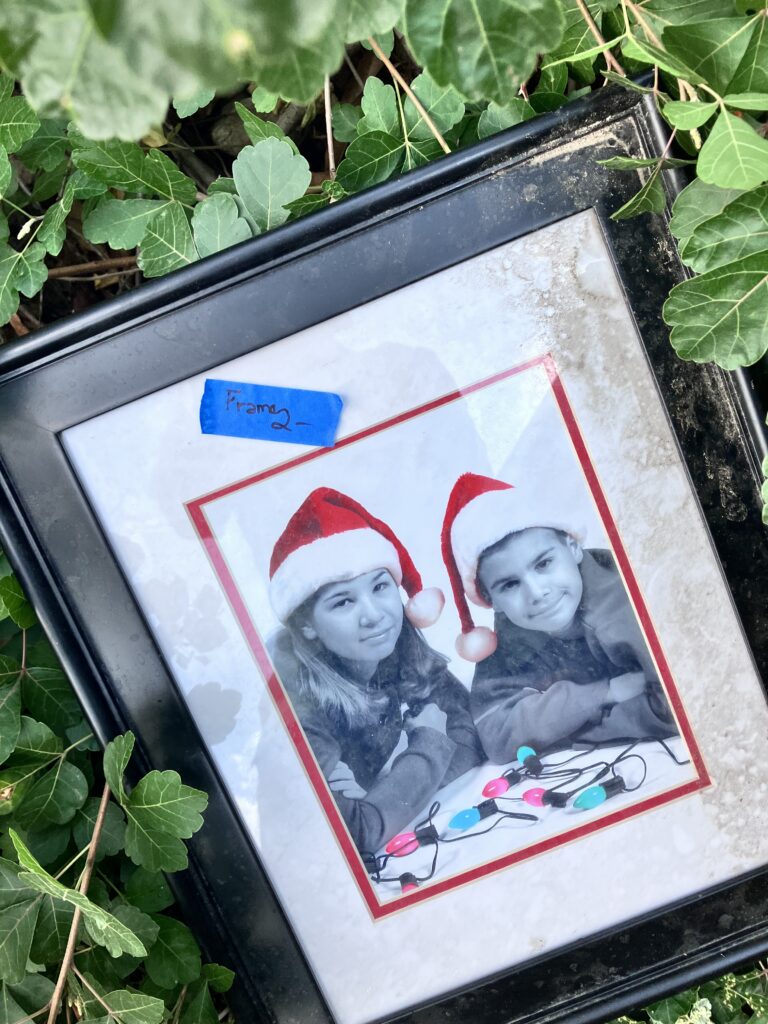
After the estate sale came the dumpster, and after the dumpster came a lone random photo, dropped in weeds, “Frame $2–.” It was the last artifact of my neighbor Louise, 84 and gone to a care place where she told me, “I hope I’ll be OK.” She’d been born in that house, and when her parents died, she inherited it and moved back. Her husband had died in the house 25 years ago, and so had her divorced son Gary in 2020, gone from prostate cancer. We watch the ambulance take him away at night, though scared in pre-vaccine quarantine, we weren’t sure who was on the gurney.
When we moved to Denver twenty years ago, Lou was the one who organized block parties. Becky and I have now lived third longest on the block, of the dozen houses here. We no longer have block parties, but we do have kids playing basketball and neighbors across the street with boisterous backyard cookouts, enviously festive.
Three weeks ago, I sat on Lou’s porch, and she remembered as a young girl who lived in every small brick bungalow, every name Italian. She’d gone to St. Catherine of Sienna’s, and all her friends went to the Catholic school, but she went to Denver North, the local public, because they had a good music program. On Saturday she’d join friends for matinees, staked for a quarter at the Federal Theater (just three blocks) or the Egyptian Theatre on 32nd, or the Oriental Theatre farther on 44th.
She told me she had to move because she’d made a mistake years ago and taken out a reverse mortgage, and the money was running out, and her daughters said she had to move. The story didn’t make sense, but she was crying, and I saw no purpose asking. “You’ll make new friends in Arvada,” I said. “I’ll come visit.”
Years ago, my father told me, “When your mother is gone and I’ve had enough, I’ll go down to the river bottoms someday, and I won’t come out.” I was horrified, but I understood Dad, and his hard-won perspective on life. For me it would be the Raggeds Wildnerness, up Dark Canyon Trail to the Anthracite Trail, on trails deeper and north. You needn’t follow.
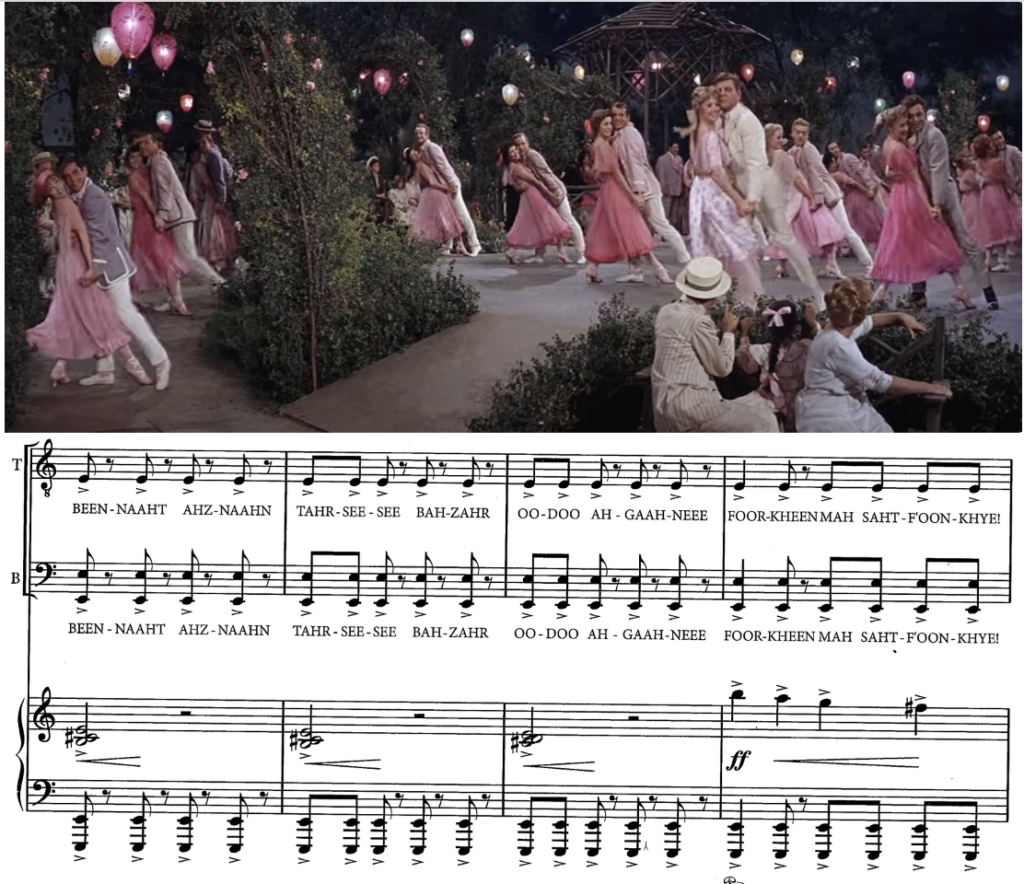
In 1992, I was in a Bloomington, Illinois, Community Players production of The Music Man, playing three ensemble parts, two of which involved considerable dancing. In the library scene I could barely pass as a town teen, dancing on tables and annoying Marian the Librarian. In the town park scene, we did that grandest of dances, the Shipoopi. I was always a fairly good singer, but in my undergrad days at Iowa, when I performed in the Old Gold Singers, a show choir, I learned to be a competent dancer. By competent, I mean if you taught me choreography, I could reproduce it reliably without embarrassing myself or hurting anyone.
But I nearly met my match with the Shipoopi. My dance partner was Sandra, a twenty-something woman whose day job was receptionist for my optometrist. Small midwestern cities mean encountering people across various unexpected domains, often through the arts, and so I found myself lifting, for a high kick, a woman who took my check and printed my prescription.
Before each of ten performances, Sandra and I would meet backstage to rehearse the dance. There was the lift, sure, and some polka steps and some fast grapevine, but the trickiest element was a series of alternating straight leg kicks, me kicking forward with a right leg, she kicking back with her left and vice versa. The trick was that these steps had occasional hitches, when through a hop, you’d disrupt the pattern. Because we were in close waltz position, chest to chest, there wasn’t room for error, meaning that if I messed up the count, I’d kick Sandra in the shin. We’d go through the sequence, softly counting in each other’s ear, “1-2, 1-2, 1 now change, 1-2,” inevitably messing up even toward the end of the run, though we always succeeded during the show.
I thought of those repetitive drills last night during a rehearsal with the Colorado Symphony Orchestra and Chorus. This week we’re providing live accompaniment to the second movie in the Lord of the Rings trilogy, The Two Towers. Early on, there’s an extended sequence where the tenors and basses do a menacing Orc chant. The combination of nonsense words (and now I’ve just offended true fans who will explain the language to me with great sophistication), of time changes from 4/4 to 2/4 to 3/4 to 5/4, and of randomly interspersed three and four eighth-note bursts baffles me. I just can’t seem to get it into muscle memory, especially at quarter note = 176. Probably better singers than I have discerned a helpful logic. But I find myself ten minutes before every rehearsal plowing earnestly through the section, albeit with no Sandra as dance partner.
The whole matter has me thinking about artistic complexity needing brute force repetition to learn, something that seems anathema to the whole business of art. A lot of music or dance obviously requires rehearsal. Usually, things like finding an obscure pitch against a dense or distant accompaniment or negotiating a long melisma achieve the status of memorization and habit, so you no longer think of the challenge. It’s just part of you. But every now and then, habit fails to materialize and I’m stuck with conscious intention and the need to practice. I fear that the “Glamdring” movement of The Two Towers is my latest Shipoopi.
It’s hardly the only one. For example, after dozens of performances of Carmina Burana’s famous drinking song “In Taberna,” plus with easily over a hundred rehearsals, I’ve finally begun internalizing the rapid-fire Latin catalog of who drinks is drinking (from dogs to monks to moms and dads). Perhaps by the time I completely trade in classical music for simple hymns I’ll have the guts to go into a performance of “In Taberna” without a couple refreshers in my living room or car.
I started college as a chemistry major and remember being terrorized by calculus. In fall of my freshman year, I got a C in the honors section of Calc 1 into which I’d been place. I was really determined to fix this, come spring. So I spent probably 15 hours a week at homework, solving problems. Just brute force grinding. I ended up with a B in Calc 2. But I had no conceptional grasp of anything I was doing, no perception of logics behind the techniques, no intuitive sense. I figured this was not a good thing for someone hoping to work in the sciences, and I honestly thought I’d reached the limit of brute force. Maybe if there’d existed a Calculus for Dummies book in 1975, things would have been different, but I just decided to get out of Dodge. Calculus was no Peter Jackson movie, and I was kicking my own shins, not Sandra’s.
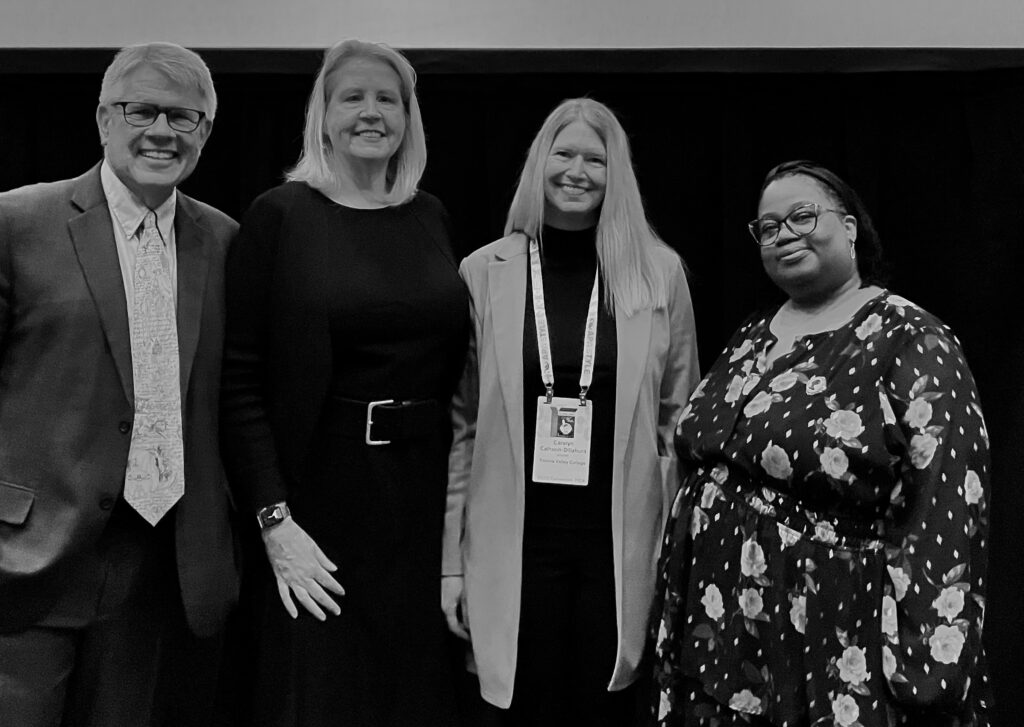
For the CCCC convention in Cleveland, March 4-7, 2026, program chair Melissa Ianetta invited 5 past chairs to talk about the convention itself in a plenary session. We explained our own experiences and speculated about the future. Gwen Pough, Carolyn Calhoon-Dillahunt, Holly Hassel (through Melissa), and I spoke. (Vershawn Young was unable to make it.) Following are my 5-minute opening remarks.
Iowa City, 1979. Richard Lloyd Jones passes flyers in class and says that most our readings came from this organization, 4Cs. So I join it.
I go to my first Cs in Washington DC, 1980, to interview through the job service then vibrant. Lynn Troyka is program chair, and 25 years later, she invites me to co-author some books.
My first time on the program is as respondent to Rick Gebhart, Anthony Petrosky, and Ed Corbett. 1982 in Detroit. Gebhardt, who later become editor of CCC, gave me his talk ahead of time. He is middle speaker, and I ignore him while panicking over what to tell Corbett.
I was program chair for San Antonio 22 years ago, choosing the theme “Making Composition Matter.” Of course, I was playing with the double sense of matters as verb and as noun. Composition studies deserved wider impact, and we should keep making material knowledge about writing. I saw myself as a steward, entrusted with traditions and trajectories I surely neither created nor owned. Cs members tilled many fields and tended many orchards. Some interested me more than others. But all that work, in all those aspects, constituted what Wittgenstein would call a vast serious game: understanding writing and making writers. My role as program chair was to stage a farmers’ market, or perhaps better, a potluck, for people to share and glean ideas. Here are three memories from 2004.
#1: Coming upon Wayne Booth studying a map and pondering how to get to the convention center. I’d invited him to talk, but in that moment, I saw how frail he was—almost as frail as Kenneth Burke at the 1989 Seattle Cs. I said, “Mr. Booth, let me get a cab and we’ll ride over together.”
#2: Hosting a dinner for Gunther Kress, Robert Scholes, and Gail Hawisher and having the good sense just to listen about semiotics, technologies, and multimodalities, there on the Riverwalk, as badged professors floated by.
#3: Walking past the Alamo with Claudio Sanchez, the NPR education reporter I’d invited to speak. The night before, Billy Bob Thornton had premiered a movie about The Alamo with a parade of longhorns through San Antonio. I asked Sanchez what he thought. He replied, “What the hell do you think I think?”
Booth, Kress, Scholes, and Hawisher are dead, as are countless other novae in my 4Cs firmament, from Janet Emig to Wendy Bishop, Mike Rose to Lynn Troyka. Sanchez lives in retirement, as do Shirley Brice Heath and Deb Brandt, Steve North and Victor Villanueva, Shirley Logan and Erika Lindemann, Kathi Yancey and Keith Gilyard (well maybe not Keith). But now in the C’s nebula are Lydia and Will, Anis and Angela, David and Kelli and Kelly and Kofi, Jeff and Liz, Eliana and Heather. Compose your own star charts.
My point: I’ve experienced the annual conference as the trajectory of tradition becoming subsequent, a Burkean parlor or, perhaps better, a Russian Ark filled with galleries refashioned each spring, Brigadoon-like, assembled by and embodied in people. This is the third sense of matter: the physical, the corporeal, the synchronous analog, the anti-Bezosian. We each inflect that material space. Gathering constellates us to better matters. At least it has, and I hope, still can.
Three weeks ago, during a time when white Christian nationalism seems to smite America in ways unrecognizably Christian, I did something that may strike progressive friends as daft. I joined a new church.
More precisely, I changed my church congregational membership to Holy Cross Lutheran, in Wheat Ridge, Colorado, part of the ELCA, for those who know their Lutherans. I’ve been an ELCA member 45 years: First Lutheran (Findlay, OH); Zion (Iowa City); St. John’s (Bloomington, IL); St. Paul’s (Denver); and now Holy Cross. Before then, I was baptized and raised in the Lutheran Church, Missouri Synod, which is a whole different ballgame: Grace (DeWitt, IA) and St. Paul’s (Iowa City). Monica was baptized in Grace, Andrew in St. Paul’s.
Enough autobiography. Why a church now?
It’s a fair question when the popular image of American Christianity is an exclusionary, judgmental, censoring, hell-consigning, Trumpastic/Hegsethian, gospel-of-wealth-driven, selectively Bible-thumping (heavy on the Old Testament) terrain, populated with people who look like me. Folks in that image are eager to seize the news, certainly. The Pew Research Center’s monumental Religious Landscape Study tells a more complex story, something we know from those images of pastors and priests getting peppered and tear-gassed at protests against ICE. Pew shows that 23% of Americans are “Evangelical Protestant” and 11% are “Mainline Protestant” (that’s me; clearly I’m not on the winning team). 19% are Catholic, and remaining Christians are strewn among other traditions. Of course, 38% of Americans aren’t Christian at all, and supporting Jews, Muslims, atheists and agonistic was something the nation’s Founders thought essential in adopting the Establishment Clause of the First Amendment.
At Holy Cross last week, Pastor Libbie Reinking, a vibrant and theologically-astute woman a few years younger than me, led an opening prayer that included our confession:
“We remember that you sent Jesus to Earth not only to be with refugees, but as a refugee himself. You made yourself known in human form as a migrant, born to a poor young woman who was forced to flee all that was familiar and dear. Remind us, oh Lord, that as we welcome refugees and immigrants, we welcome you. Forgive us for all the ways we have individually and collectively fallen short to do this holy work of welcome.”
Not exactly the creed of White Christian Nationalism, right?
Part of the church’s attraction, I’ll confess, is less theological than aesthetic. I like singing hymns, and I like the patterns of the liturgy. Last week, the closing hymn was “Jesus Still Lead On” or, as I know it best, “Jesus, Lead Thou On” or as I sang it as a solo many times at Grace Lutheran, for an annual German service, “Jesu geh voran auf der Lebensbahn.” My interests in hymns and liturgy seem quaint, even off-putting to many people, I’m sure. I’ll even admit impatience with newer hymns written for unison, with repetitive texts. I try to do better.
But the heart of the church experience is the weekly gospel and its explication in a sermon. (I’m an English professor, so I’m probably more invested than most in passages and their interpretation.) The assigned gospels have been challenging this fall, and I’ve appreciated Pastor Libbie wrestling with them thoughtfully, not trying to glaze them over. Last week’s, Luke 18:1-8, was a little more straightforward and timely. It’s the parable of a widow seeking justice from an “unjust judge,” as Luke puts it. Inevitably as I sat in the pew that morning and every Sunday, I thought hard about the historical moment when the gospels were written and their resonance with the present.
I’m happy to gather with other people willing to ponder such things, grappling with ancient gospels and aspiring to enact a Christian vision greatly at odds with what’s being touted by contemporary Pharisees who aspire to dominate America’s temple.
I’ll reflect more later on mainstream church traditions–and yes, yes I know how the Lutheran church in Germany was too often complicit with Nazism, even as pastors like Martin Niemoller weren’t. But let me end this with a statement from Holy Cross as a Reconciling in Christ church. If you’re in Denver and want to learn more, just contact me:
“Holy Cross Lutheran Church welcomes all who are seeking God’s grace and love in an open and affirming congregation. We welcome people of all sexual orientations, gender identities, and gender expressions; of every race, ethnicity, and culture; and of every socio-economic situation. We are committed to racial equity and our doors are open to all regardless of religious background, age, abilities, or life experiences. We affirm the sacredness of all those who have experienced exclusion, whether by family, church, or society. We are a Reconciling in Christ Community. You are most welcome here.”
I was born eleven years after World War II, when America thought it had defeated fascism, and the world thought it had so exposed the horror of genocide that we’d never let it happen again. And yet I’ve lived long enough to see America build concentration camps, to see the world’s children starving (or bombed or shot) according to government actions and designs.
I was born 91 years after the Civil War, when there were still people alive who had lived in slavery. It would be another nine years before landmark voting and civil rights legislation would legally enshrine the proposition that all men are created equal. (Women? Another matter.) And while few people were deluded that mere law would end racism, the law at least declared our national aspiration for all citizens . And yet I’ve lived long enough for certain Americans to denigrate that city on a hill into a dark fetid gulch, cheering a racist leader whose sense of history extends only to what he could exploit yesterday.
I was born when American cities, Los Angeles to Denver to Cleveland were gray-hazed with particulates and smog, banked on brown rivers so toxic they could strip paint or catch fire. Americans realized that protecting the environment through clean air, water, and energy actually protected people—including grandchildren and unborn generations. And yet I’ve lived long enough to watch emboldened oligarchs and opportunists care about neither. Worst, they’ve had the power, economic and propagandistic, to sell the world’s future for a buck today, never minding science or the interests and wishes of the people.
I was born during the presidency of Republican Dwight Eisenhower, who, whatever his shortcomings, served faithfully and expertly in World War II, who oversaw a blazing economy driven by a 90% top tax bracket, and who warned of the dangers of a military-industrial complex he saw antithetical to the nation’s best future. And yet I’ve lived long enough to see a Republican draft dodger, a 34-time felon, who measures public service only in personal hatred and endless grifting, abetted by stupid, evil, or cowardly (you choose) Republican representatives declining to question anything about him.
There are days I think I’ve lived long enough.
But then there are days like this morning, when I hear from dozens of friends and family around the country who share my bewildered outrage. They are people with a sense of history and the sense of a future born not of greed or vindictive hatred, in which my gain comes only at your loss or oppression. They embrace a future born of understanding that they are neither the first nor the last nor the best nor the only people to live, in America or in the world. They are people for whom “liberty and justice for all,” both present and future, remain our best aspirations.
As I sit on my porch, this 69th birthday, I think of those countless friends. I think of my Mom and Dad, of birthday cake in a small town Iowa park, the world—my world—still full of possibility, naïve but in the very best way.
Today (July 10, 2025) I’m taking part in the CWPA summer conference program, which is happening virtually, in a robust Zoom platform that allows lots of interesting interactions. It made me recall the very first WPA conference (in the days before the organization acronym acquired a C) that I attended, in sweltering late July, in Oxford, Ohio. It was more convenient just to walk down to my basement this morning for the first session. But 36 years ago, we all got on a riverboat in Cincinnati for dinner and dancing (with Susan Jarratt, Mary Ann Cain, George Kalamaras, Lynn Bloom, Bud Weiser, Susan Miller, David Bartholomae, and so many others) on a Friday night, and I do miss those days.
On a flight last week, I struck up a conversation with a woman and her husband sitting next to me. They were retired physicians, she a pediatrician at the university and he the chief of radiology at a big Denver hospital. We were both returning from visiting kids and grandkids. She asked how I liked retirement, and I said I enjoyed having time to write a book, but mostly I was just happy to be able to pull weeds out of flowers each morning without worrying about the clock.
She was bemused, even aghast. They’d moved into a big downtown high rise condo precisely so they didn’t have to worry about a yard, especially since they were spending retirement traveling. In fact, they’d just be in Denver for a couple days before taking off for a ten day bicycling tour in Austria, the third such European cycling tour they’d done. She recounted their other travels, though I lost track somewhere between Thailand and the Galapagos.
For hardly the first or fifth time, I felt like I was failing retirement. My one-year anniversary was July 1, and I have no big journeys to recount, no significant accomplishments, no next calling, no momentous volunteering. At times I feel a little ashamed. It seems that some many retired friends—not to mention retired strangers—are doing Meaningful Things, while I’m puttering around writing letters, reading books, and pulling dandelions. There’s the nagging feeling I’m derelict.
I’m warned, “One day you’ll be too old and sick, and then you’ll regret wasting your early retirement.” Maybe. And maybe there’s something wrong with me, some lack of imagination or late life ambition. I certainly had plenty of the latter until the day I retired, always in pursuit of something, often professional leadership roles, so it’s been wonderful not worrying about writing reports, balancing budgets, or worrying about struggling colleagues. Maybe I’ve become Odysseus among the Lotus Eaters.
I think of my father’s retirement. He stepped off the garbage truck where he’d worked 25 years, the last of his many jobs and small businesses. His knees and hips were shot, and he was relieved not to have to worry about paying fuel bills, working through the flu or snow drifts, or losing a contract. No one ever asked Dad what meaningful things he planned to do next. His trips consisted mostly of putting his flatbottom boat into the Wapsi or Cedar Rivers to go catfishing with Ray Cole or John Camp. Big journeys were visiting kids and grandkids in Georgia and Texas, seeing school events in Iowa and Illinois.
I regret never asking Mom and Dad if they were satisfied in retirement. I’d like to have asked if wish they done things differently. I know what they’d have told me. I don’t know if that would have been accurate.
It’s perhaps an occupational hazard of a certain professional class—including professors, whom I know best—to have goals in retirement. Mind you, I have the goal of making closer friends, which turns out to be pretty challenging, despite best intentions. The friends I’ve made over the years have all moved away at various points—or I left them—and starting over, virtually, at age 68 takes more wherewithal and less introversion than I can easily muster. I spend embarrassing amounts of time screwing up the courage to make a phone call or a plan.
I thought the independence of retirement would feel different, but I find a new dependence on satisfying expectations, anticipation future regrets that, in fact, may never come, all the while figuring that others are doing things better and doing things the way I should. Meanwhile, I buy postage stamps and pull hoses and sift archives.
The American Bicentennial happened the summer I turned 20. That July 4th I ran a 10K race in Clinton, Iowa. Riverboat Days. I was in good shape, but I hadn’t planned well, especially for a hot morning. I’d gone by myself. Fortunately, Dr. Ash was running the race, and some of his family saw me after and shared cold drinks. That afternoon, Hazel Tech took me to a nursing home in Davenport, where she played piano and I sang a few patriotic songs. Mrs. Tech, my best friend Vance’s mom, was the church choir director at Grace Lutheran DeWitt, and she was the first person to encourage me to sing.
On the Fourth of July, 2025, the American President announced he’ll celebrate the nation’s 250th birthday next year by holding a UFC Fight on the grounds of the White House. Maybe this will be in conjunction with the reality TV show he’s mused about, the one where longtime residents with jobs and kids and hardworking dreams are made to compete with each other to avoid deportation through Alligator Auschwitz. For our entertainment.
I don’t remember, but I highly doubt my heart’s desire July 4, 1976, was to sing “America the Beautiful” for incontinent geriatrics on a hot afternoon. I did partly because, as someone who grew up as a “good boy,” something I repeatedly heard my whole life, I figured it was a good thing to do. But I’m sure I did so partly because I hadn’t planned ahead, didn’t have a more desirable option, having simply wandered into the holiday as I’ve wandered into retirement.
Clearly America has wandered profound since that day. I’ve been joining protests and writing to politicians, but without method—and certainly without effect, as yesterday’s vote for stupid cruelty revealed. My single consolation is that a clear majority of Americans—whether by polling or by representation—don’t want this. That’s small solace when North Dakota has the same number of United States of America Senators as does California. But I have to believe that most Americans, however gerrymandered into idiocy, have a stronger, historical vision on our democracy than the selfish despots some have elected. Probably the most meaningful “project” for retirement will be to figure how best to spend waning energies and talents to counteract the greedy decline that Republicans under Dear Leader have charted.
Saturday afternoon I was walking back from our small neighborhood grocery store, where the annual customer appreciation event included free hot dogs and one dollar beers (from the in-store bar) when I passed a Little Free Library down the block. Our neighborhood has a dozen of them, and I’m well-acquainted with their owners’ reading tastes. (I can’t imagine any pedestrian saying, “Hey, I want that 1986 accounting textbook or C+ manual,” but that’s just me.)
This particular library is reliably high quality, and two books immediately caught my attention. One was a hardcover first edition of Tom Wolfe’s The New Journalism, a 1973 book whose 50-page introduction is a landmark statement of what came to be known as creative nonfiction, or a substantial corner of it. I’ve cited and taught the piece many times, from photocopies and a pdf I acquired years ago. But, heck, even in retirement, I thought it would be nice to have a copy of the thing itself.
The second book was Emily Watson’s 2023 translation of The Iliad. It was a pristine copy that had unceremoniously been discarded from the Denver Public Library. I hope and figure that the Library kept another copy or two around, that they’d just bought a bunch of them, expecting a run on Homer, and were now just paring down after the reading frenzy. It’s not that they’re lacking shelf space. My local branch, the Woodbury Library, on Federal, has about 40% of its shelves occupied. I get that folks are reading (or listening) digitally these days, but I’m thinking it wouldn’t be terrible to keep stocked at 75% or so, for the decor even if not for reading.
Anyway, I’d never read The Iliad. It seemed like something I ought to have done, and dotage wasn’t too late to check it off. I’d read The Odyssey as a sophomore in college, in a marvelous course called Biblical and Classical Literature, in which we read everything from Job to Sophocles. Liked it. Of course, I knew all about The Iliad (I thought) from pop culture references, way down to Brad Pitt’s Achilles sprinting down the beach, gold hair flying, in the movie Troy. It was time to pay dues and make good, so last night I spent three hours starting the book.
It’s good, and the translation is spectacular, happily readable. But a few things struck me. Foremost is the petty vanity of so many characters, who are motivated, yes, by a sense of duty and pride in nation but equally or more by ego and entitlement. Am I sitting the place I deserve at the banquet table? Am I getting a good cut and portion of meat? Do people respect me sufficiently? I mean, am I doing the proper thing to get recognized and honored?
So much of what’s going on is brand management.
Even when characters are doing the right thing, their reasons are misguided and conflicted. Hector comes from afar to defend Troy because he knows Greek invaders are bad for local lands. At a crucial point, he knows he should lend his considerable skills to the city battlements, staying inside where he really can do most good. But where’s the glory in that? Where, further, do people expect him to be? What will they think if he’s not out there leading charges? What will he think of himself? So he goes out, kills Patroclus, pisses off Achilles, and ultimately gets his carcass drug behind a chariot for a few days.
I can’t help but think of Iliadic behavior these days in so many Republican leaders for whom Trump is their Zeus, entertaining himself at the expense of humanity. Some of those leaders even understand that the bill, while big, is really bad, but they have reputations (for hatred? for meanness? for fascist nationalism?) to uphold. They want to sit at the right hand of Trump and eat the tenderloin. They have no greater motivating principle than keeping stature before a group of petty electors, though they may conjure some pretext of past greatness they fancy themselves restoring. Meanwhile, on the plains before Troy and in the city itself, tens of thousands die needlessly because Paris and Menelaus think with their crotches and egos, and convince enough of their bros that fame and glory are there for taking. In the end, Troy burns and arrows hit heels. I hope the latter, at least.
And to think I just started the afternoon wanting a free hot dog.
Stage 2 Reviewers, CCCC 2004 Program, at NCTE Urbana, June 26-28,2003. Front: Jaime Mejeia, Doug Hesse, Catherine Hobbs. Back: Sue Hum, Freddy Thomas, Sterling Warner, Peter Mortensen, Eileen Maley, Jay Wootten, Kate Ronald, Lori Ostergaard
I’ve had occasion this week to think back 22 years, to Urbana, Illinois, where I’d organized Stage 2 Reviewers to help put together the Conference on College Composition and Communication Program for March 2004 in San Antonio. Prior to our gathering, dozens of reviewers had rated hundreds of proposals, and we had the results in thick folders of printouts, one proposal per page. I divided the group into small teams and assigned each some clusters to review. Their task: decide what to put in the program. This included combining similar-enough papers into groups of three and conjuring a title for the result. These were days of sifting piles of paper at tables, in energetic conversation.
That was the technical process. What stays with me, however, was the camaraderie. We met occasionally as a whole group to discuss our work, but most of the time was in small rooms scattered around the NCTE headquarters at 1111 W. Kenyon Road. We’d share funny paper titles or read aloud striking lines, but the side conversations were vital: stories of our teaching and families and projects and summer plans.
Lori, Peter, and Sue making panel magic
At noon we’d walk across the street to the Urbana Garden Family Restaurant, a familiar midwestern code for a place with a menu a mile long, from salads to burgers to plates. At night, we’d go to one of several excellent restaurants in Champaign/Urbana and have a couple bottles of wine. One evening, Peter Mortensen had us all over to his house, a sprawling place on a tree-arched street. I recall he and his wife serving an amazing Stilton cheese, so good that a couple of us went the next day to the small cheese shop to buy some for ourselves.
About a month after the Stage 2 meeting, I got a big package of note cards. Each contained a session for the program. Lori Ostergaard, then my program assistant and now editor of College English, and I arranged a room of tables in Stevenson Hall at ISU, right across from the English Office. We spread meeting times for the 4-day program, then deployed sessions across them, looking for balance, avoiding conflicts, sifting and resifting until we got things as good as they’d be. We joked about who’d be upset with us for sticking them at 8 am on Friday or late morning on Saturday, but someone had to be there.
In the fall, Lori and I traveled to San Antonio to preview the convention site. We got a sense of all the rooms, their shapes and sizes, information that was useful when we got back to Normal and I had to place sessions in rooms. Who would be the big draws? I had, after all, Sandra Cisneros, Gunther Kress, Bob Scholes, Deborah Brandt, Wayne Booth, Claudio Sanchez, and dozens of other luminaries. While we were on that trip, I took the photographs that would be used in the program, the subject of an earlier blog post.
A fuzzy picture of Sue and me (dark-haired!)in the main seminar room at NCTE. On the white board is a list of all the session clusters, with quotas for each next time them. The clusters being crossed out suggests they’d been completed, so we were near the end of our work. Sue was Local Arrangements co-chair for San Antonio.
I contrast that experience, born in a different era, with how things are done now. It’s deemed too costly and–this saddens me–too inconvenient to travel to gather in person. Of course, at a high level I get it. But it was special to spend a few days physically with people you didn’t know very well, people from different sorts of schools and with different scholarly interests. There was time to learn about backgrounds and families as well as classrooms and projects. Now we Zoom, and it’s almost entirely business, finishing tasks with minimal interactions and certainly no shared Stilton on a midwestern summer porch beneath oaks and maples. Sure Zoom is more efficient and likely more inclusive of people for whom travel is hard, but it comes at cost of in-person interactions that foster trust and occasionally friendships. Having recently Zoomed a couple of days for an organization, I can say there will be no tales remembered 22 years from now. I took a desultory screen capture at one point. Less than a quarter of us looked at the camera and each other.
I recently found a forgotten recording from 20 years ago that includes me singing a solo. I was nervous about listening to it. I have a certain sense of how I used to sound–and of how I sound now. Maybe I’d learn my memory was flawed. Vanity. Maybe my memory is accurate, and I’d be depressed at my current ability. Reality.
Cantus Novus was a small amateur chamber chorus of 24 or in Bloomington, Illinois. We were competent, with some flashes of artistry, but we sang challenging music and had a great time doing it. That concert had six songs by Aaron Copeland, and my turn comes on “The Boatmen’s Dance. In addition to some good fiddling, the recording features a song suite, “South Dakota Shadows,” which I remembered as a really pretty piece. Not only had I forgotten the recording, I’d forgotten that my son Andrew, and his then-girlfriend (now wife) Molly played in a string quartet.